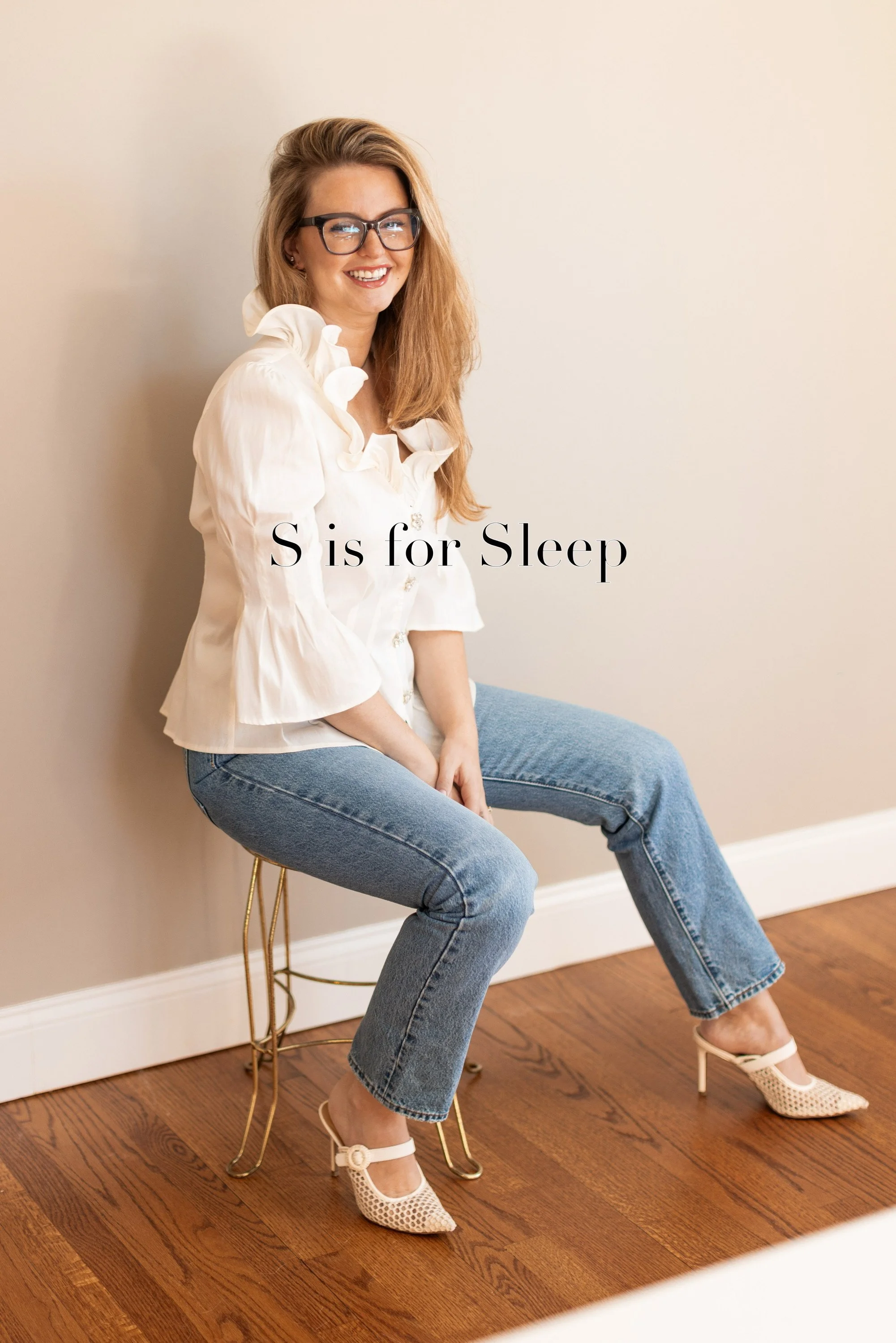
S is for Sleep
Soleil’s name has many meanings. Of course, it is French for “sun”, it means light, warmth, vitality. However, it’s also an acronym. The pillars of our practice are summed up in the name.
S is for SLEEP.
In 2017, the American Dental Association released a statement on the dentist’s role in the treatment of sleep related breathing disorders. A portion of this statement is included below:
“Sleep related breathing disorders (SRBD) are disorders characterized by disruptions in normal breathing patterns. SRBDs are potentially serious medical conditions caused by anatomical airway collapse and altered respiratory control mechanisms. Common SRBDs include snoring, upper airway resistance syndrome (UARS) and obstructive sleep apnea (OSA). OSA has been associated with metabolic, cardiovascular, respiratory, dental and other diseases. In children, undiagnosed and/or untreated OSA can be associated with cardiovascular problems, impaired growth as well as learning and behavioral problems.
Dentists can and do play an essential role in the multidisciplinary care of patients with certain sleep related breathing disorders and are well positioned to identify patients at greater risk of SRBD. SRBD can be caused by a number of multifactorial medical issues and are therefore best treated through a collaborative model. Working in conjunction with our colleagues in medicine, dentists have various methods of mitigating these disorders. In children, the dentist’s recognition of suboptimal early craniofacial growth and development or other risk factors may lead to medical referral or orthodontic/orthopedic intervention to treat and/or prevent SRBD. Various surgical modalities exist to treat SRBD. Oral appliances, specifically custom-made, titratable devices can improve SRBD in adult patients compared to no therapy or placebo devices. Oral appliance therapy (OAT) can improve OSA in adult patients, especially those who are intolerant of continuous positive airway pressure (CPAP). Dentists are the only health care provider with the knowledge and expertise to provide OAT. “
Earlier in my career, I thought that the fabrication of sleep apnea devices was the extent of a dentist’s role in sleep. I had seen some doctors make mandibular advancement devices or snore guards. As I get further along, I have realized that dentists are uniquely positioned as the best healthcare professional to screen for sleep disordered breathing and recognize signs of sleep problems early on. Why is this? Let’s break it down.
Most Americans see their dentist more often than their primary care physician (this is an entirely separate discussion we could talk about at length)... On average, I see my well-maintained, healthy patients 2-4x/year. Some physicians see their patients once every 2-3 years. This means that we have a closer eye on the health of our patients and this is a responsibility. Changes in tooth structure, saliva quality and quantity, tooth position, TMJ pain are all markers we need to pay close attention to.
Signs of sleep disordered breathing first show up in the mouth. I am evaluating a patient’s risk for sleep disordered breathing before they even sit in the chair. I’m looking at oral resting posture (is your mouth closed, open?), lip chapping, darkness under the eyes, scalloped tongue, Mallampati score, dental wear, fracture lines, caries risk, cheek biting, muscle strain, etc. All of these are signs that your body may not be getting adequate rest and oxygenation at night and should be investigated further.
Dentists are the ones who will be repairing the teeth for years as sleep disorders go untreated. Mouth breathing decreases saliva quantity, leaving you less protected against dental decay. It inflames the tissue, causing gingivitis and/or periodontal disease. Severe bruxism can cause teeth to fracture and bonding to break. If you continue to need fillings despite having excellent oral hygiene, it may be time to look at your breathing and sleep. If your tissue continues to bleed despite daily flossing, what is causing that underlying inflammation? If you want predictable dental visits and you want to make sure you keep your teeth for the rest of your life, you cannot neglect your breathing, your sleep and your oral resting posture.
Dentists are structuralists. We have the tools to shift teeth into more ideal positions, to expand the palate, to release restricted tissue, to build back lost tooth structure. If you already suffer from a sleep disorder and are unable to tolerate CPAP, there are other options. Myofunctional therapy (training the oral and facial muscles to function properly), orthodontic treatment (moving the teeth into more ideal, protected position), tongue tie release (releasing tight tissue to allow for better oral resting posture), and restorative dentistry (crowns, veneers, etc) can all play a part in getting you to sleep and breathe better.
I could go on and on about the reasons dentists need to be screening for sleep disordered breathing, but we’ll leave it at this for today. If you’re a dentist curious about how to become more airway informed and stop doing tooth-first dentistry, send me a message. There are so many amazing resources available. If you’re a patient and you have concerns about your sleep, breathing, or oral health, we are HAPPILY accepting new patients at Soleil Dental Co. Send me a message or call 860-436-5330. We’ll change how you think about your oral health :)
Very warmly yours,
Dr. Megan Rascius & Soleil Dental Co.